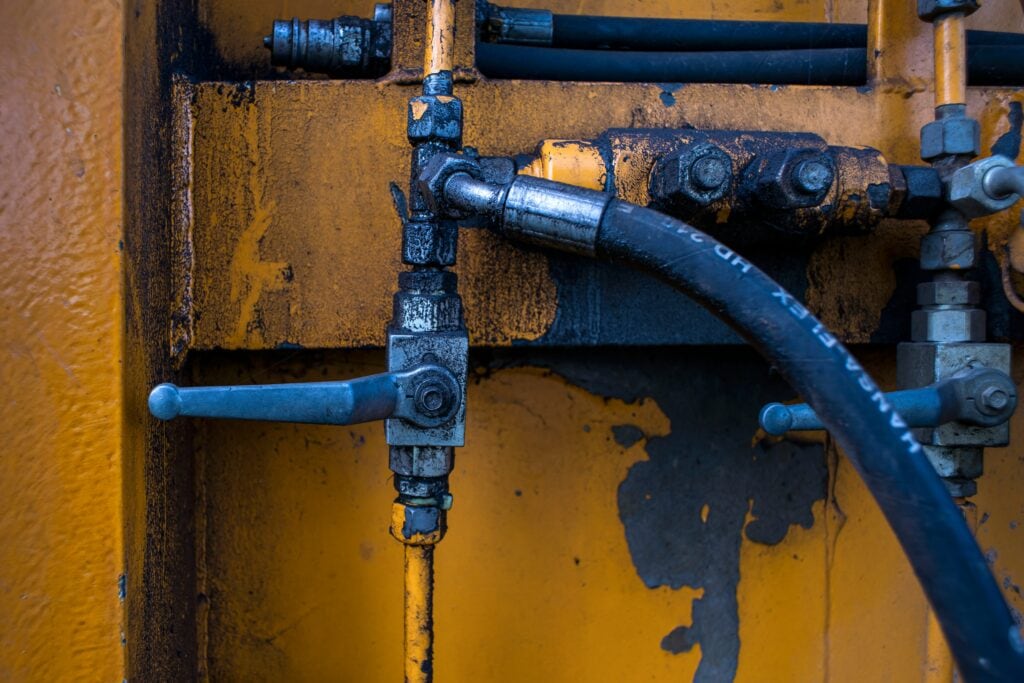
You pull an old hydraulic hose off a piece of equipment, wipe away the dirt, and notice a string of numbers and letters printed along the outside. You see something like “SAE 100R2AT” followed by pressure ratings, hose size, and other manufacturer information that you may or may not understand. Those markings aren’t random, and they’re there to help you identify the hose’s construction, size, pressure capability, and applicable industry standards, which makes ordering a replacement part a lot easier. Understanding what you’re looking at can make it much easier to replace a worn hose or verify that you’re using the right one for the job.
Why Are Hydraulic Hoses Marked?
Most hydraulic hose manufacturers print identifying information directly on the hose cover. These markings are there to help determine the hose’s specifications without cutting it apart. Depending on the manufacturer, the printing may include part number, hose size, SAE specification, working pressure, and date of production. Some hoses also include temperature ratings or additional industry certifications. If the printing is still legible, it provides a great starting point when you’re replacing a hose assembly.
What Does the SAE Number Mean?
One of the most important markings you’ll see is the SAE designation. SAE stands for the Society of Automotive Engineers, now known as SAE International. This organization publishes industry standards that define the construction and performance requirements for many types of hydraulic hose. For example, you may see designations such as:
- SAE 100R1
- SAE 100R2AT
- SAE 100R12
- SAE 100R16
- SAE 100R17
These designations identify hose types covered by SAE J517. Each type has requirements for characteristics such as construction, dimensions, working pressure, bend radius, and performance testing. Here is a quick breakdown of some of the common SAE numbers:
- SAE 100R1 is a single-wire braided hydraulic hose commonly used for medium-pressure applications.
- SAE 100R2AT uses two layers of wire braid and is designed for higher-pressure hydraulic service than the R1 hose.
- SAE 100R12 is a four-spiral-wire hose intended for higher-pressure applications that require greater strength.
- SAE 100R17 is a compact, constant-pressure hose designed for high-pressure service. Its smaller outside diameter and tighter bend characteristics can make it useful in crowded installations.
The SAE designation helps narrow down the correct replacement, but it’s not the only factor you need to consider when picking a new hydraulic hose.
What Does the Pressure Rating Tell You?
Every hydraulic hose is designed to operate within a specific pressure range. The printed working pressure indicates the maximum continuous operating pressure the hose is designed to handle under normal conditions.
This number does not refer to the hose’s burst pressure. Manufacturers also establish minimum burst pressures during testing, but hydraulic systems should always be selected and operated using the published working pressure rather than the burst rating. Replacing a hose with one that has a lower working pressure than the original can create a serious safety risk.
How Do You Read the Hose Size?
Most hydraulic hoses also list a size designation. Many manufacturers use dash sizes that correspond to the hose’s nominal inside diameter.
For example:
- -4 typically represents a 1/4-inch inside diameter.
- -6 typically represents a 3/8-inch inside diameter.
- -8 typically represents a 1/2-inch inside diameter.
- -12 typically represents a 3/4-inch inside diameter.
Choosing the correct inside diameter is important because it affects hydraulic flow throughout the system. A hose that is too small may restrict flow and increase pressure loss, whereas one that is too large may not match the equipment manufacturer’s specifications.
Can You Order a Replacement Using Only the Hose Numbers?
The markings provide valuable information, but they may not identify everything needed to build a replacement assembly. You’ll also need to know the hose length and fitting type, size, and orientation.
Bringing your old hose to your trusted hydraulic distributor is your best bet for getting a comparable replacement. Even if some of the printing has worn away, the assembly itself usually provides enough information for an experienced hydraulic supplier to identify the correct replacement.
Need Help Identifying a Hydraulic Hose?
Dewald Fluid Power is here to help. We build custom hydraulic hose assemblies at our Mishawaka location, often while you wait, and we stock a wide range of hydraulic hose, fittings, adapters, and related components. If you have questions, stop by our Mishawaka counter, give us a call, or request a quote. Our team will help you identify the right hose assembly for your equipment.