
Not every hydraulic system has a building to plug into. Dump trailers, snowplows, service trucks, and lift gates all need hydraulic power on the move, often nowhere near an outlet.
That’s the gap a DC hydraulic power unit fills. It’s a compact, self-contained system that runs on a 12-volt or 24-volt battery instead of building power, so it can go wherever the equipment goes.
Here’s what one actually is, how it works, and how to know whether your equipment needs one.
What a DC Power Unit Actually Is
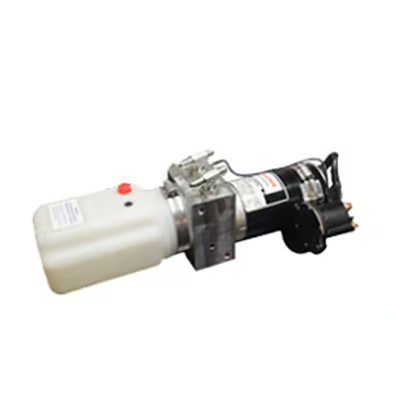
A DC hydraulic power unit packages everything you need into a single assembly: a DC electric motor, a hydraulic pump, a fluid reservoir, and control valves. Instead of pulling AC power from a facility, the motor draws current directly from a battery, which is what makes the whole unit portable.
Because the components ship as one combined package rather than separate parts to plumb together, these units are popular with equipment manufacturers who need a hydraulic solution that bolts on and works.
How It Works
Battery power energizes the DC motor, which turns the pump. The pump pulls fluid from the reservoir and sends it, under pressure, through valves and hydraulic lines to do the actual work: raising a bed, extending an outrigger, or running a lift gate. Once the cycle finishes, fluid returns to the reservoir and sits ready for the next pull.
Most of these applications don’t run continuously. They need a short burst of power a handful of times a day, which is exactly the duty cycle a DC unit is built for. A dump trailer bed might cycle a few times per load, then sit idle for hours, and the battery never has to work harder than that.
Where You’ll Find Them
DC hydraulic power units show up anywhere equipment needs to operate independently of facility power:
- Dump trailers and dump trucks
- Snowplows and tilt trailers
- Service trucks and tow trucks
- Lift gates and mobile work platforms
- Agricultural equipment and RV systems
A dump trailer is a good example: a 12-volt power unit wired straight to the trailer battery lets the operator raise and lower the bed with no external power source required, anywhere the trailer can be parked.
Why Equipment Builders Choose DC
- Compact footprint. Significant hydraulic power without eating up the limited space on a trailer or mobile rig
- Independent operation. Runs on battery power, so it works on remote job sites and in the field, no facility power needed
- Simplified installation. Motor, pump, reservoir, and controls arrive as one assembly, cutting down on plumbing and wiring
- Reliable performance. Proven, simple design that holds up in demanding conditions when properly sized
- Built to spec. Pressure, flow, voltage, reservoir size, and controls can all be configured to match the application instead of forcing a one-size-fits-all unit onto it
Signs You Might Need One
A DC power unit is worth considering if your equipment operates off-grid, runs on battery power, needs intermittent rather than continuous hydraulic force, or simply can’t spare the space for a full AC system.
It’s also worth a second look if your current power unit is oversized, hard to maintain, or built around parts the manufacturer no longer supports. The same goes for a unit that’s already failed: rather than chase obsolete replacement parts, a properly sized custom build often restores function and improves performance at the same time. Sizing matters here too. Oversizing drives up cost and hurts efficiency, while undersizing wears components out early, so matching the unit to actual pressure, flow, and duty cycle requirements is worth getting right up front.
Built Right, From Dewald Fluid Power
DC hydraulic power units are one of our core specialties at Dewald Fluid Power. We stock ready-to-ship 12V and 24V units for dump trailers, lift gates, and tilt trailers, and our engineering team designs and builds custom configurations for applications that need something more specific. Browse our DC Power Solutions catalog or contact our team directly, and we’ll help you find or build the right power unit for your equipment.